Skilled Trades in the Age of Automation
While white-collar workers fear AI will steal their jobs, skilled electricians and plumbers work in automation-proof careers facing a severe worker shortage—with only 3.3% of electricians under 25 despite booming wages. The trades offer recession-resistant stability that corner offices can't match, yet training programs graduate 130,000 fewer workers annually than the market demands.
Skilled Trades in the Age of Automation
In gleaming office towers across America's cities, white-collar workers nervously eye their computer screens, wondering if ChatGPT will write their next memo or if an algorithm will analyze their quarterly reports. Meanwhile, thirty floors below in the building's mechanical room, 54-year-old electrician Maria Santos adjusts a complex control panel that manages the tower's entire electrical grid—a job that's more secure from automation than most corner office positions above her.
This is the great irony of our automated age: while artificial intelligence threatens to revolutionize knowledge work, skilled trades face their biggest challenge not from robots, but from a severe shortage of human workers willing to learn these recession-proof, automation-resistant crafts.
The Numbers Tell the Story
The statistics paint a stark picture of an industry in demographic crisis. The average age of electricians in America now stands at 42, while plumbers average 46 years old—both significantly higher than the general workforce average of 39. More troubling still, only 3.3% of electricians are under 25, compared to 13% across all occupations.
The immediate impact is a jobs gap of staggering proportions. The Bureau of Labor Statistics projects that 430,000 new construction workers will be needed annually through 2031, while current training programs graduate fewer than 300,000 per year. In major metropolitan areas, the shortage is even more acute—cities like Seattle and Austin report plumbing contractor wait times of 3-6 weeks for routine service calls, while electrical contractors in Denver and Nashville routinely turn down commercial projects due to lack of skilled personnel.
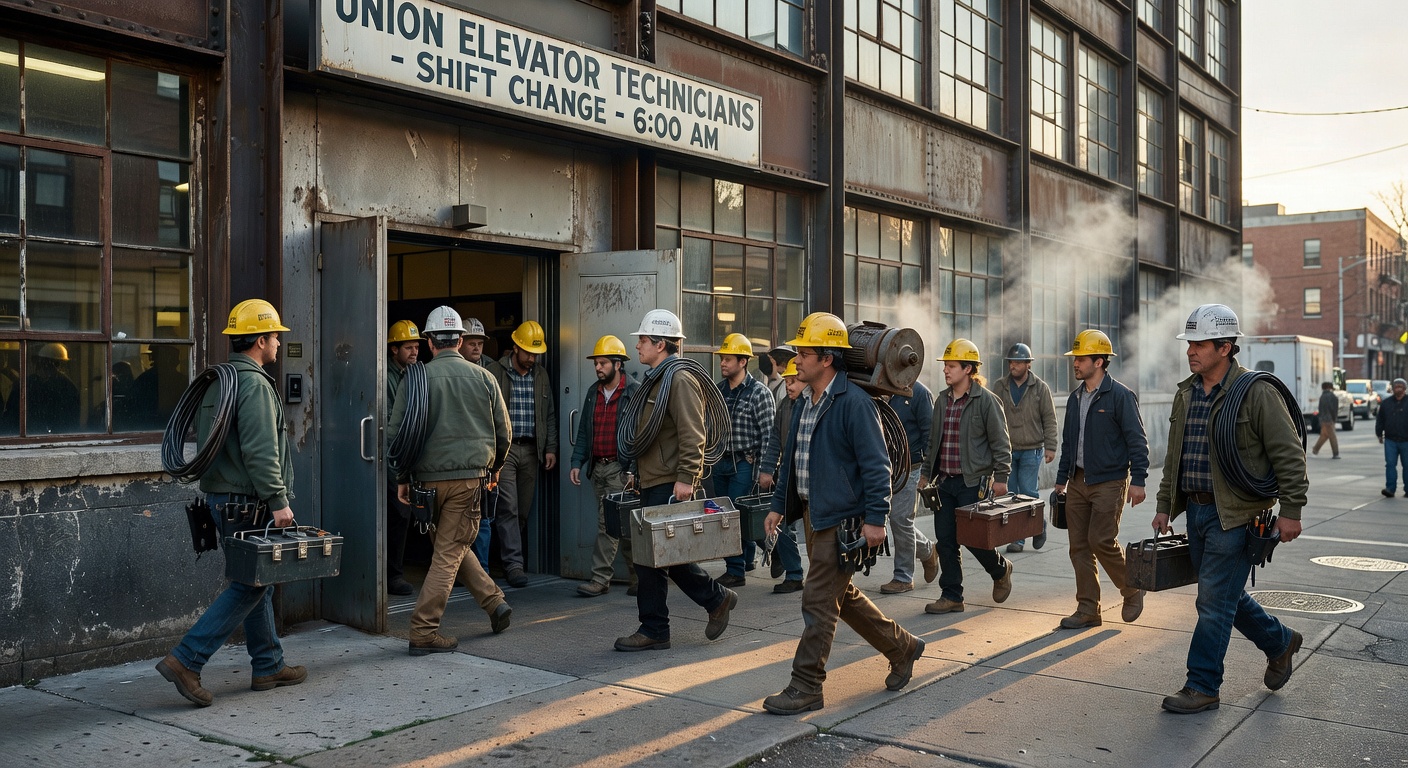
But here's where the irony deepens: these unfilled positions come with increasingly attractive compensation packages. Electricians saw median wage growth of 12% between 2019 and 2022, outpacing inflation and most white-collar professions. Master plumbers in major cities now command hourly rates between $75-$120, often earning more than middle managers in corporate America. Union elevator technicians—the specialists who install and maintain the vertical transportation systems in our urban towers—can earn upwards of $100,000 annually, with some veteran technicians clearing $150,000 or more.
Why Robots Can't Replace Plumbers
The reason skilled trades remain stubbornly resistant to automation lies in their fundamental nature. Unlike data analysis or document preparation—tasks that follow predictable patterns—trades work requires constant adaptation to unique, site-specific challenges.
"Every building is different, every problem is unique," explains Tom Rodriguez, a master electrician with 25 years of experience retrofitting New York skyscrapers. "Yesterday I diagnosed a power fluctuation in a 1920s building where the original knob-and-tube wiring was somehow interfering with a new LED lighting system. No AI could have figured out that puzzle—it required understanding history, physics, and a lot of intuition."
Consider the physical complexity involved in installing plumbing in a 40-story residential tower. Plumbers must navigate cramped utility corridors, work around structural beams, accommodate architectural changes made during construction, and solve pressure and flow calculations that vary based on factors from water temperature to seasonal usage patterns. The manual dexterity required—fitting pipes in spaces barely large enough for human hands, making precise cuts with portable tools in awkward positions—remains far beyond current robotic capabilities.
Even when automation does enter the trades, it typically enhances rather than replaces human workers. Modern HVAC technicians now use tablets to diagnose building management systems and rely on thermal imaging cameras to identify problems, but they still need the experience to interpret those readings and the skill to physically repair complex mechanical systems.
The Stigma Problem
Perhaps no factor has contributed more to the trades shortage than three decades of "college for all" messaging that positioned four-year degrees as the only path to middle-class prosperity. Well-intentioned guidance counselors, parents, and policy makers created a cultural narrative that skilled trades were somehow "lesser" career choices—temporary stops for those who couldn't hack it in the knowledge economy.
This messaging proved remarkably effective at steering students away from trades programs. High school shop classes disappeared, vocational education was defunded, and apprenticeship programs saw enrollment plummet. The result was a generation gap: baby boomer tradespeople began retiring without a pipeline of younger workers to replace them.
The cultural consequences extended beyond mere numbers. Skilled trades work—which had traditionally passed from parent to child or through tight-knit community networks—lost its intergenerational knowledge transfer system. The informal mentorship that once taught young workers not just technical skills but professional wisdom largely disappeared.
Building New Pathways
Recognizing the crisis, educators and industry leaders are pioneering innovative approaches to rebuild the trades pipeline. Community colleges are partnering directly with construction companies and unions to create "earn while you learn" programs that allow students to work on real projects while completing their education.
The military-to-trades pipeline represents another promising development. Veterans often possess the discipline, teamwork skills, and comfort with technology that modern trades require. Programs like Helmets to Hardhats have successfully transitioned over 45,000 veterans into building trades careers, with retention rates significantly higher than traditional hiring approaches.
Perhaps most importantly, apprenticeship programs are being redesigned for a new generation. Modern electrical apprenticeships now include training on smart building systems, renewable energy installations, and electric vehicle charging infrastructure. Plumbing programs cover not just traditional pipe-fitting but also greywater recycling systems and smart home water management technology.
The Evolution of Skilled Work
Far from being stuck in the past, today's skilled trades are rapidly evolving to meet the demands of increasingly sophisticated urban infrastructure. The electrician installing lighting systems in a new office tower isn't just running wire—they're integrating sensors, programmable controls, and energy management systems that communicate with building automation networks.
The transition to renewable energy has created entirely new specializations. Solar installation technicians combine traditional electrical skills with knowledge of photovoltaic systems, energy storage, and grid integration. Similarly, the electrification of transportation is driving demand for EV charging infrastructure specialists—electricians who understand both traditional power distribution and the unique requirements of high-capacity charging systems.
HVAC technicians now work with building automation systems that would be unrecognizable to their predecessors. They program smart thermostats, maintain variable refrigerant flow systems, and optimize energy usage through sophisticated control algorithms—all while retaining the fundamental mechanical skills to diagnose and repair complex equipment.
Building the Vertical City
This evolution is perhaps most visible in our cities' defining structures: skyscrapers. These towers represent marvels not just of engineering and architecture, but of skilled trades coordination. A typical 50-story office building requires the expertise of dozens of specialized trades, from the ironworkers who erect the steel frame to the glaziers who install curtain wall systems.
Inside these towers, elevator technicians maintain vertical transportation systems that move thousands of people daily. Fire sprinkler fitters install life safety systems designed to protect building occupants. Low-voltage electricians wire the data networks, security systems, and building controls that make modern office towers function.
These aren't jobs that can be automated away—they require human judgment, problem-solving skills, and physical capabilities that remain unique to human workers. As our cities continue reaching skyward, the demand for these skills will only intensify.
The age of automation may be reshaping the nature of work, but it's also highlighting the enduring value of skilled trades. While algorithms master pattern recognition and robots handle repetitive tasks, the complex, variable, and intensely human work of building and maintaining our urban infrastructure remains firmly in human hands—assuming we can train enough hands to do it.