Working the Shift: America’s Expanding Nighttime Economy
America's nighttime economy has evolved from a small afterhours sector into a substantial workforce of over 17 million people, driven by 24/7 delivery expectations, globalized supply chains, and on-demand service culture that now accounts for 10-15% of employment in major metros. The expansion creates genuine economic opportunity through flexible scheduling and wage premiums while simultaneously exposing night shift workers to documented health risks, inadequate social services, and inconsistent labor protections that existing infrastructure was never designed to support. Cities from New York to Philadelphia have begun responding by appointing Night Mayors and pilot-testing solutions like rest hubs and late-night clinics, yet the challenge remains fundamentally architectural and systemic rather than simply logistical. The core tension is that infrastructure, zoning, and policy frameworks built for daytime economies cannot simply extend to nighttime operations without deliberate redesign that treats the night as its own distinct environment rather than a pale copy of the day. Organizations operating in this space must recognize that the nighttime economy is no longer marginal—it is structural to how modern cities function—and that failure to invest in equitable nighttime systems will deepen divides between those who benefit from round-the-clock commerce and those who bear its costs.
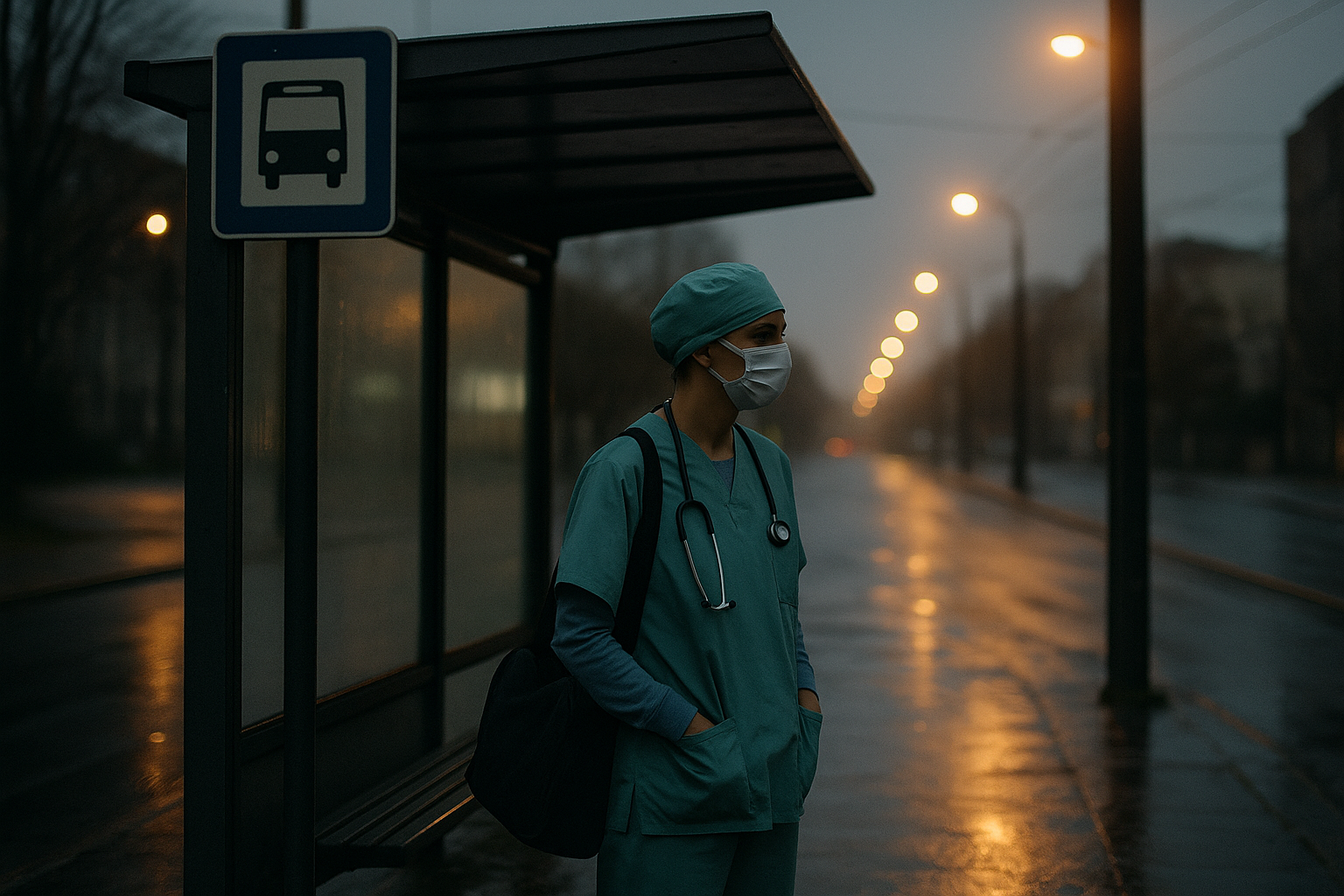
At 3:17 a.m. on a Wednesday in Atlanta, a refrigerated delivery van idles behind a Buckhead restaurant while a crew breaks down a pallet of produce. Three blocks east, a warehouse fulfillment team at a last-mile logistics node is staging same-day orders placed by customers who hit "Buy Now" just before midnight. A nurse at a 24-hour urgent care clinic on Peachtree Road clocks out, waits alone at a bus stop with a 40-minute headway. These are not anomalies. According to a 2024 Brookings Institution analysis, more than 17 million Americans now work regularly between 6 p.m. and 6 a.m. — a figure that has expanded steadily with 24/7 delivery culture, globalized supply chains, and the always-on expectations of digital commerce. "The 9-to-5 economy no longer reflects how cities actually operate," says Dr. Miguel Jensen, an urban geographer at NYU. "The night has become a frontier of both productivity and inequality."
The Scale of the Shift
The Brookings figure — 17 million overnight workers — is itself likely an undercount. It excludes gig-classified workers who log hours through platform apps and are not captured in traditional payroll surveys. Sectors driving the growth are unsurprising in aggregate but striking in their breadth: healthcare, long-haul freight, warehouse operations, food preparation, building security, and remote call-center work serving international time zones. In Las Vegas, Miami, and Houston, the nighttime economy accounts for between 10 and 15 percent of total municipal employment, according to city economic development reports. But the phenomenon is not confined to entertainment capitals or port cities. Mid-size metros — Columbus, Salt Lake City, Raleigh — have seen measurable after-hours growth in distribution, healthcare staffing, and digital services, driven by the same on-demand logistics infrastructure that reshaped retail over the past decade.
Sophia Reyes manages a shift at a regional distribution hub outside Denver that handles roughly 4,200 outbound packages per overnight cycle. Her facility runs three shifts, with the 11 p.m.-to-7 a.m. window processing the highest volume — orders placed during prime evening browsing hours. "People want what they want, when they want it," she says. "Someone's got to make that happen, and that someone is almost always working nights." The facility, a 680,000-square-foot cross-dock operation in Adams County, is one of dozens that have opened along the I-76 and I-70 corridors since 2018, part of a broader industrial land grab that has reshaped suburban Denver's zoning map and strained its overnight transit capacity.
Economic Promise, Structural Exposure
The nighttime economy generates real economic value — and distributes it unevenly. Overnight wage premiums, where they exist, typically run 10 to 15 percent above base pay, offering a meaningful increment for students, caregivers, and workers holding multiple jobs. Secondary business growth follows: 24-hour diners, gas stations, security contractors, and transit operators all expand payrolls in response to overnight demand. Philadelphia's Office of Nighttime Economy, established in 2019 under then-Mayor Jim Kenney, estimated that the city's after-dark sector generated approximately $1.3 billion in annual economic activity — a figure that includes hospitality, food service, entertainment, and logistics combined. New York City has maintained a dedicated Night Mayor position since 2017, currently held by Ariel Palitz, whose office mediates between residential communities and late-night businesses while advocating for expanded subway service windows.
Yet the structural risks are concentrated at the bottom of the wage distribution. Night shift workers face elevated rates of cardiovascular disease, metabolic disorder, and anxiety — consequences of disrupted circadian rhythms documented extensively in occupational health literature. Access to social infrastructure during overnight hours remains thin: childcare facilities, health clinics, legal aid offices, and most municipal services operate on daytime schedules. Zoning and licensing frameworks, written for a 9-to-5 city, often fail to account for the operational realities of 24-hour businesses — leaving workers in legally ambiguous environments and employers uncertain about liability. Labor advocates in cities including Chicago and Los Angeles have pushed for what they call "shift equity" standards: predictable scheduling minimums, mandatory rest periods between shifts, and access to employer-provided transit subsidies for workers who cannot reach their jobs by public means after midnight.
Some jurisdictions are experimenting. San Francisco's Office of Economic and Workforce Development has piloted "rest hubs" — small, staffed facilities near transit nodes where gig workers can charge devices, access restrooms, and receive basic health screenings during overnight hours. The program, launched in 2022 with $2.4 million in initial city funding, serves an estimated 800 workers per week across three locations. It is modest in scale relative to the city's gig workforce, but it represents a policy framework that other cities have begun to study.
Infrastructure Lagging the Clock
The physical city has not kept pace with its economic clock. Transit systems remain the most visible failure point. The Metropolitan Transportation Authority in New York runs subway service around the clock, but frequency drops sharply after midnight — a structural mismatch for a city where hundreds of thousands of workers depend on the system for overnight commutes. Chicago's 'L' suspends service on most lines between roughly 1 a.m. and 4 a.m., leaving a gap precisely when second- and third-shift workers need connectivity. Los Angeles, with a transit system built around peak-hour commuters, offers skeletal overnight bus service across a metropolitan area of 13 million people — a design that effectively mandates car ownership for anyone working non-standard hours.
Lighting, land use, and building design are also implicated. Cities including Amsterdam, Seoul, and Melbourne have developed formal nighttime urban strategies that treat after-dark activity as a distinct planning category rather than an afterthought. Amsterdam's Nachtburgemeester — the original "Night Mayor" model, established in 2003 — has since been replicated in more than 60 cities globally, with mandates that extend beyond nightlife regulation to include worker safety, transit coordination, and mixed-use zoning guidance. Seoul's 2023 Night Economy Activation Plan allocated ₩180 billion (approximately $135 million USD) toward infrastructure improvements in designated overnight commercial districts, including enhanced street lighting, 24-hour transit frequency on key corridors, and relaxed licensing hours for food and beverage operators in specified zones.
In the United States, zoning remains the bluntest instrument — and the most resistant to reform. Most American municipalities still rely on use-based zoning frameworks that separate residential, commercial, and industrial land uses in ways that make mixed-use, 24-hour districts legally complicated to build and operate. Floor-area ratio caps in many inner-ring suburban jurisdictions effectively prohibit the density that would make overnight transit viable. Where cities have moved toward form-based codes — Minneapolis, Buffalo, and Hartford among them — the results have included more flexible ground-floor activation and longer operating windows for retail and service uses. But the connection between zoning reform and nighttime economic equity has rarely been made explicit in policy documents, leaving a significant gap between land-use theory and labor reality.
Designing for the Dark
A small but growing cohort of architects, planners, and developers is beginning to treat the nighttime city as a distinct design problem. The question is not simply how to keep buildings lit and active after dark, but how to configure ground-floor programming, loading access, transit adjacency, and public space in ways that serve overnight workers as well as evening consumers. In Houston's Midtown district, a mixed-use redevelopment along Main Street has incorporated 24-hour pharmacy and urgent care uses at the ground floor of a 22-story residential tower, with a dedicated loading bay configuration that separates delivery traffic from pedestrian circulation — a detail that matters considerably at 3 a.m. The project, completed in 2022 by Hines and designed by Gensler's Houston office, sits within a transit-oriented development zone with a 4.0 FAR and direct access to the METRORail Red Line, which operates until 1:30 a.m. on weekdays.
"The goal isn't to replicate daytime norms at night," Dr. Jensen says. "It's to understand the night on its own terms — socially, economically, spatially — and design infrastructure that reflects those distinct conditions." That reframing has implications well beyond architecture. It suggests that workforce policy, transit scheduling, zoning law, and public health programming need to be coordinated around a shared recognition that the American city now operates across a full 24-hour cycle — and that the workers sustaining that cycle deserve infrastructure built to serve them.
The political will to make that investment remains uneven. Cities with dedicated night economy offices — New York, Philadelphia, Washington D.C., and a handful of others — have at least created institutional homes for the conversation. But most American municipalities have not. As e-commerce volumes continue to grow, as healthcare demand expands with an aging population, and as globalized service work pushes more labor into overnight hours, the gap between the city's economic clock and its physical infrastructure will widen. The night shift is not a niche. It is, increasingly, the backbone of how American cities function — and the question of who bears the cost of that function, and who receives its protections, is one that urban policy has only begun to answer.